Business Operations
Real Estate Virtual Assistants from the Philippines: The Hiring Guide for US Realtors
Save over $32K/year by hiring Filipino real estate VAs for MLS, transaction coordination, CRM updates, and lead follow-up—plus hiring tips.
11 min read

Hiring a Filipino real estate virtual assistant (VA) can save you over $32,000 annually compared to a US-based assistant. These professionals handle 60–80% of your administrative workload, including MLS entries, transaction coordination, CRM updates, and lead follow-up. With hourly rates ranging from $8–$18 and strong English skills, they’re a cost-effective solution for US realtors needing reliable support.
Key Benefits:
- Affordable Rates: $8–$18/hour vs. $25–$45/hour for US-based assistants.
- Skilled Workforce: Familiar with tools like Follow Up Boss, Dotloop, and SkySlope.
- Time Zone Flexibility: Can work US business hours (EST or PST).
- High English Proficiency: Over 90% literacy rate in the Philippines.
To hire effectively:
- Define the role and required tools (e.g., MLS systems, CRMs).
- Use platforms like FindTalent.ph to find pre-screened candidates.
- Conduct structured interviews and start with a 30-day trial.
- Onboard thoroughly with clear SOPs and regular check-ins.
Filipino VAs are a smart choice for realtors looking to save time and money while scaling their business operations.
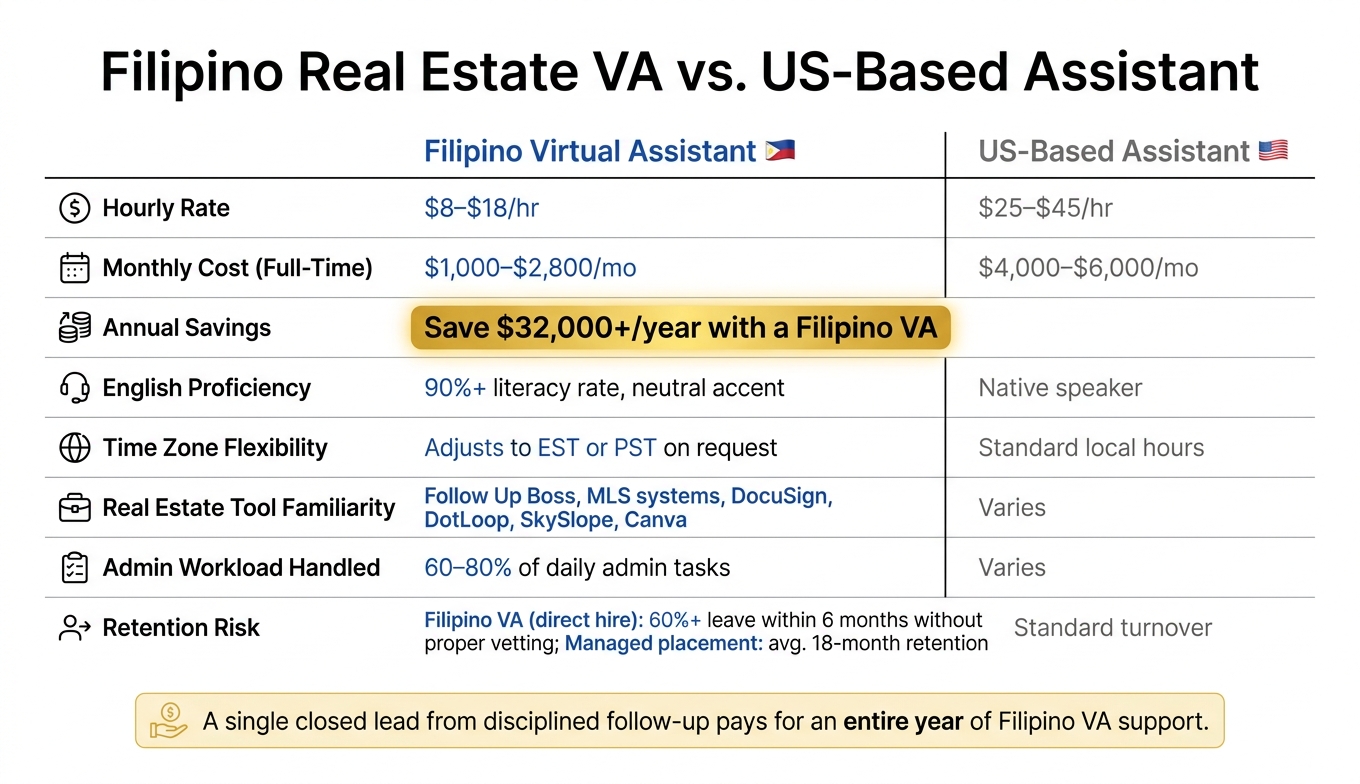
Filipino VA vs. US-Based Assistant: Cost & Value Comparison for Realtors
Why Filipino Real Estate VAs Are a Smart Hiring Choice
English Skills and Alignment with US Work Culture
The Philippines boasts an English literacy rate exceeding 90%, the highest in Asia. This ensures Filipino VAs can communicate clearly, write effectively, and adapt smoothly to US work environments. These qualities are especially crucial for roles like lead qualification or coordinating property showings.
The country’s thriving BPO (Business Process Outsourcing) industry has further honed these skills. Years of experience in BPO roles have equipped Filipino professionals with excellent phone etiquette, strong objection-handling techniques, and top-tier customer service. As Julian Lundgren, Co-Founder of Philippines Virtual Assistants, highlights:
"Filipino accents are neutral enough that most US clients on the phone don't notice."
- Julian Lundgren, Co-Founder, Philippines Virtual Assistants
To assess their suitability, consider requesting a short voice introduction or scheduling a quick 10-minute call to evaluate their phone presence firsthand.
Familiarity with US Real Estate Workflows
Filipino VAs often come with direct experience supporting US real estate teams, making them familiar with the tools and processes your team likely already uses.
| Category | Tools Filipino VAs Commonly Know |
|---|---|
| CRMs | Follow Up Boss, kvCORE, LionDesk, BoomTown |
| Transactions | DocuSign, DotLoop, SkySlope, zipForm |
| MLS Systems | Matrix, Flexmls, Stellar MLS, Paragon |
| Marketing | Canva, Mailchimp, Zillow Premier Agent |
| Dialers | Mojo Dialer, Vulcan7, Batch Dialer |
Real estate tasks are often document-heavy, deadline-driven, and follow strict procedures - areas where Filipino VAs excel. As Julian Lundgren explains:
"Real estate is one of the most popular VA verticals in the Philippines because the workflows transfer well: most admin tasks are document-driven, deadline-driven, and rules-based."
- Julian Lundgren, Co-Founder, Philippines Virtual Assistants
When interviewing candidates, ask which MLS systems they’ve used and the states or boards they are familiar with. This can significantly reduce onboarding time. Their proficiency with these tools, combined with their adaptable schedules, ensures smooth collaboration with US-based teams.
Working Across US Time Zones
Time zone differences are rarely a challenge. Filipino VAs are accustomed to adjusting their working hours to align with their clients. For example, a VA working 5:00 PM–1:00 AM Philippine Time can provide real-time support for agents on the US West Coast. Alternatively, a VA working a standard Manila day shift (8:00 AM–5:00 PM PHT) can cover US evenings and early mornings - key times for responding to online real estate leads.
"Filipino specialists routinely align to client schedules - full US business hours, PST-evening shifts, or AU-morning starts are all standard arrangements rather than exceptions, because two decades of BPO night-shift work have normalized this flexibility."
- FindTalent
sbb-itb-3690fed
Real Estate Virtual Assistant from Philippines
Tasks You Can Hand Off to a Filipino Real Estate VA
Managing your workload effectively is crucial in real estate, and Filipino virtual assistants (VAs) excel at handling a wide range of tasks. In fact, they can take on 60–80% of your administrative responsibilities, giving you more time to focus on your clients. Here’s a closer look at the key tasks they can manage.
Admin Support and Calendar Management
The foundation of reducing administrative stress lies in delegation. A Filipino VA can handle tasks like sorting emails, scheduling showings, screening incoming calls, and keeping your calendar organized. They also ensure your CRM systems - whether it’s Follow Up Boss, kvCORE, or Sierra Interactive - are updated and ready to support your business needs.
But their contributions don’t stop there. VAs also play a significant role in managing listings and transactions.
Listing and Transaction Coordination
Keeping listings and transactions running smoothly can be time-consuming, but VAs are equipped to manage these tasks efficiently. They upload property listings to MLS platforms like Matrix or Stellar MLS, arrange photo shoots, and syndicate listings to popular sites like Zillow, Realtor.com, and Redfin.
On the transaction side, they handle contract-to-close processes by setting up escrow files, managing disclosures, sending signature packets through tools like DocuSign or DotLoop, and tracking important deadlines for inspections, appraisals, and loan approvals.
As Julian Lundgren, Co-Founder of Philippines Virtual Assistants, explains:
"Strong TCs save agents 8–12 hours per transaction and prevent the compliance gaps that lead to E&O claims."
It’s important to note that VAs cannot perform tasks requiring a U.S. real estate license, such as signing contracts, conducting physical showings, or negotiating terms.
Beyond administrative and transaction support, VAs can also elevate your marketing and lead generation efforts.
Marketing and Lead Generation
Consistency is the backbone of effective marketing, and this is where VAs shine. They can manage lead nurturing campaigns through email and SMS, qualify inbound leads, and make outbound calls to FSBOs (For Sale By Owner), expired listings, and absentee owners using tools like Mojo Dialer or Vulcan7.
VAs also handle social media calendars, create marketing materials like flyers using Canva, and prepare weekly market reports or Comparative Market Analysis (CMA) packets for client presentations. Among these tasks, lead follow-up stands out as one of the most profitable roles for a real estate VA, often recouping their cost in just the first month.
How to Hire a Filipino Real Estate VA
Now that you’re familiar with what a Filipino VA can bring to the table, it’s time to dive into the hiring process. Taking a step-by-step approach can make the whole process smoother and ensure you find the right fit.
Define the Role and Your Needs
Before you even post a job ad, get clear on exactly what you’re looking for. Do you need help with tasks like MLS listing input and CRM maintenance in platforms like Follow Up Boss or kvCORE? Or is your priority full-scale transaction coordination for multiple active files? Your specific needs will shape both the type of VA you hire and how much you’ll pay them.
Be upfront about the tools and software your VA will need to know. Mention everything in the job description - DocuSign, SkySlope, DotLoop, your MLS system, and your CRM. Don’t forget to include details about shift hours and any technical requirements, such as a stable wired internet connection, a USB headset, and a reliable backup plan for power or internet outages.
Once you’ve nailed down your requirements, head over to FindTalent.ph to connect with pre-screened candidates.
Finding VAs Through FindTalent.ph
With a clear role description in hand, you can start searching for candidates who meet your criteria. FindTalent.ph is tailored to help U.S. businesses connect with experienced Filipino professionals. For real estate tasks, you can filter candidates by skills - like MLS management, CRM automation, or transaction coordination - as well as by hourly rate and badges such as Top Rated or Rising Talent.
The platform allows you to browse profiles, compare candidates, and message them directly - no recruiter fees or markups. If you’d rather skip the initial screening process, you can opt for the Recruiter-Assisted Plan. Their team will handle the sourcing and vetting for you, providing one to three pre-screened matches with a free replacement guarantee. Considering that over 60% of direct-hire VAs tend to leave within six months if not properly vetted, working with pre-screened candidates can save you a lot of time and trouble.
Screening and Interviewing Candidates
A polished application doesn’t always translate into strong on-the-job performance. That’s why a structured screening process is essential. Start with a written task, review their portfolio, and follow up with a live interview.
For the written portion, ask candidates to draft something practical, like a lead re-engagement email. Writing quality is often a strong indicator of overall VA performance. During the live interview, test their hands-on knowledge by having them complete a CRM-related task - like setting up a drip campaign in Follow Up Boss. This helps you distinguish between candidates who genuinely know the software and those who’ve simply listed it on their resume.
If the role involves phone work, schedule a quick 10-minute call to evaluate their English fluency and phone etiquette. Attention to detail is also crucial, especially for roles like transaction coordination. To test this, include a specific instruction in your job post (e.g., requiring a specific subject line in their application email). Candidates who miss this step may lack the precision you need.
Once you’ve found a promising candidate, start with a 30-day trial. Outline clear weekly goals - like responding to inbound leads within two hours - to gauge their performance before making a long-term commitment.
Onboarding and Working with Filipino VAs Long-Term
After hiring, the real work begins. The key to a successful collaboration lies in how you onboard your VA, maintain communication, and safeguard sensitive data.
Setting Up Onboarding and Training
Once you hire Filipino virtual assistants, the first week should focus on granting access and sharing essential documentation. Provide access to tools like Follow Up Boss, MLS systems, DocuSign, SkySlope, and DotLoop right away. Alongside these, share your Standard Operating Procedures (SOPs). These should outline the unique aspects of your workflow, such as your CRM tagging system, specific MLS requirements, and your preferred follow-up schedules.
For tasks that require more detailed guidance - like MLS data entry or setting up drip campaigns - create short Loom videos. These video walkthroughs are easier to follow than written instructions and can be revisited as needed. Keep in mind that the first 30 days will naturally progress at a slower pace.
"The first 30 days are slower than steady state; by month 2-3 the VA runs your unique processes better than you do because they're executing them every day instead of in 30-minute bursts between showings." - Julian Lundgren, Co-Founder, Philippines Virtual Assistants
Once the initial onboarding is complete, shift your focus to consistent communication and regular performance reviews to ensure everything stays on track.
Communication and Performance Tracking
During the first month, weekly check-ins are crucial. They help you catch any missed steps early and clarify processes before small problems turn into recurring issues. Use tools like Slack for daily communication and Trello for tracking tasks and deadlines.
Define clear Key Performance Indicators (KPIs) from the start. Examples might include: "respond to all inbound leads within 2 hours" or "maintain zero untagged CRM contacts". If you're using a managed placement service, you'll likely have a dedicated Success Manager who handles these check-ins and addresses any concerns before they escalate. This structured approach is one reason managed placements often see VAs staying for an average of 18 months, compared to a 60%+ dropout rate for direct hires within the first six months.
Data Security and Compliance Basics
Real estate work often involves handling sensitive client information like addresses, financial records, and Social Security numbers. Before your VA accesses any live files, have them sign both a Non-Disclosure Agreement (NDA) and a Data Processing Agreement (DPA) to establish clear confidentiality guidelines.
For sharing credentials, use a password manager like 1Password instead of emailing login details. Also, set up role-based access controls within your CRM and MLS systems. This ensures your VA only has access to the information they need for their role, minimizing unnecessary exposure to sensitive data.
Conclusion
Hiring a Filipino real estate virtual assistant (VA) goes beyond just saving money - it’s a smart move that lets you focus on what you do best: closing deals. These professionals are skilled in using key tools like Follow Up Boss, MLS systems, DocuSign, and SkySlope. They also work within your schedule, communicate effectively, and can take on 60–80% of your daily administrative workload.
When it comes to cost, the numbers speak for themselves. A full-time Filipino VA typically costs between $1,000 and $2,800 per month. Compare that to $4,000–$6,000 for a U.S.-based assistant, and you’re looking at annual savings of over $32,000. As the WorkFil Editorial Team puts it:
"A single saved transaction (or a single closed lead from disciplined follow-up) pays for the entire year of VA support."
To make the most of this opportunity, it’s crucial to follow a structured hiring process. Clearly define the role, ensure tool proficiency, start with a 30-day trial, and set up regular communication. Skipping any of these steps can lead to challenges, as over 60% of direct hires leave within six months when these practices aren’t followed.
Platforms like FindTalent.ph simplify the process by connecting you with pre-screened real estate specialists. With no extra fees or long-term contracts, you can onboard quickly and efficiently.
FAQs
What should I delegate first to a real estate VA?
Start with straightforward, repetitive tasks such as entering CRM data, adding listings, posting on social media, and managing inbound lead triage. These types of tasks are great for assessing key qualities like communication skills, dependability, and their ability to stick to deadlines before entrusting them with more intricate duties.
How do I protect client data with a remote VA?
To protect sensitive client information while working with a remote virtual assistant (VA) from the Philippines, it's crucial to implement strong security protocols. Start by using NDAs (Non-Disclosure Agreements) and confidentiality agreements to establish clear expectations about data protection.
When sharing credentials, rely on password managers for secure transmission and storage. Limit access to necessary information by setting up role-based permissions, ensuring the VA can only access what’s essential for their tasks. Keep a detailed record of permissions granted and regularly audit access levels to ensure compliance.
If the working relationship ends, immediately revoke credentials to prevent unauthorized access. These steps not only reduce the risk of data breaches but also help maintain compliance with privacy standards, offering peace of mind when managing sensitive information.
What’s the best way to set KPIs for my VA?
Defining clear, measurable KPIs is crucial to ensuring your virtual assistant (VA) stays aligned with their role and your business objectives. These KPIs could include metrics like lead contact rate, transaction deadlines, or inquiry response times. Be sure to communicate these expectations during the onboarding process and establish a schedule for regular performance reviews.
Consider starting with a trial period, such as 30 days, to actively monitor their performance and make any necessary adjustments. By consistently tracking these KPIs, you can ensure your VA is meeting expectations and contributing effectively to your business goals.