Business Operations
How to Hire Filipino Virtual Assistants in 2026
Guide to hiring skilled Filipino virtual assistants: sourcing, contracts, payments, tools, and management for reliable remote teams.
12 min read

Hiring Filipino virtual assistants in 2026 is easier, more efficient, and cost-effective than ever. Here's why businesses are increasingly turning to professionals from the Philippines:
- Cost Savings: Filipino VAs cost 60%-80% less than U.S.-based employees. For example, a U.S. admin assistant costs $50,000–$75,000 annually, while a comparable Filipino VA costs $12,000–$24,000.
- High Skill Levels: Many VAs specialize in fields like AI, eCommerce, SEO, and video editing, using tools like Slack, Asana, and Adobe Premiere.
- English Proficiency: 92% of Filipino professionals are fluent in English with neutral accents, making communication seamless.
- Long-Term Partnerships: U.S. companies now employ Filipino VAs for an average of 160 hours per month, integrating them into core operations.
- Streamlined Hiring: Platforms like FindTalent.ph use AI to match businesses with pre-vetted candidates, offering fixed pricing, skills testing, and a free replacement guarantee.
To hire effectively:
- Define the tasks, skills, and tools you need.
- Use AI-powered platforms like FindTalent.ph for tailored matches.
- Test candidates with trial tasks and conduct interviews.
- Finalize contracts with clear terms and ensure compliance with labor laws.
- Use cost-efficient payment methods like Wise or Payoneer.
Filipino VAs provide a skilled, reliable workforce at a fraction of the cost, helping businesses save money while maintaining quality.
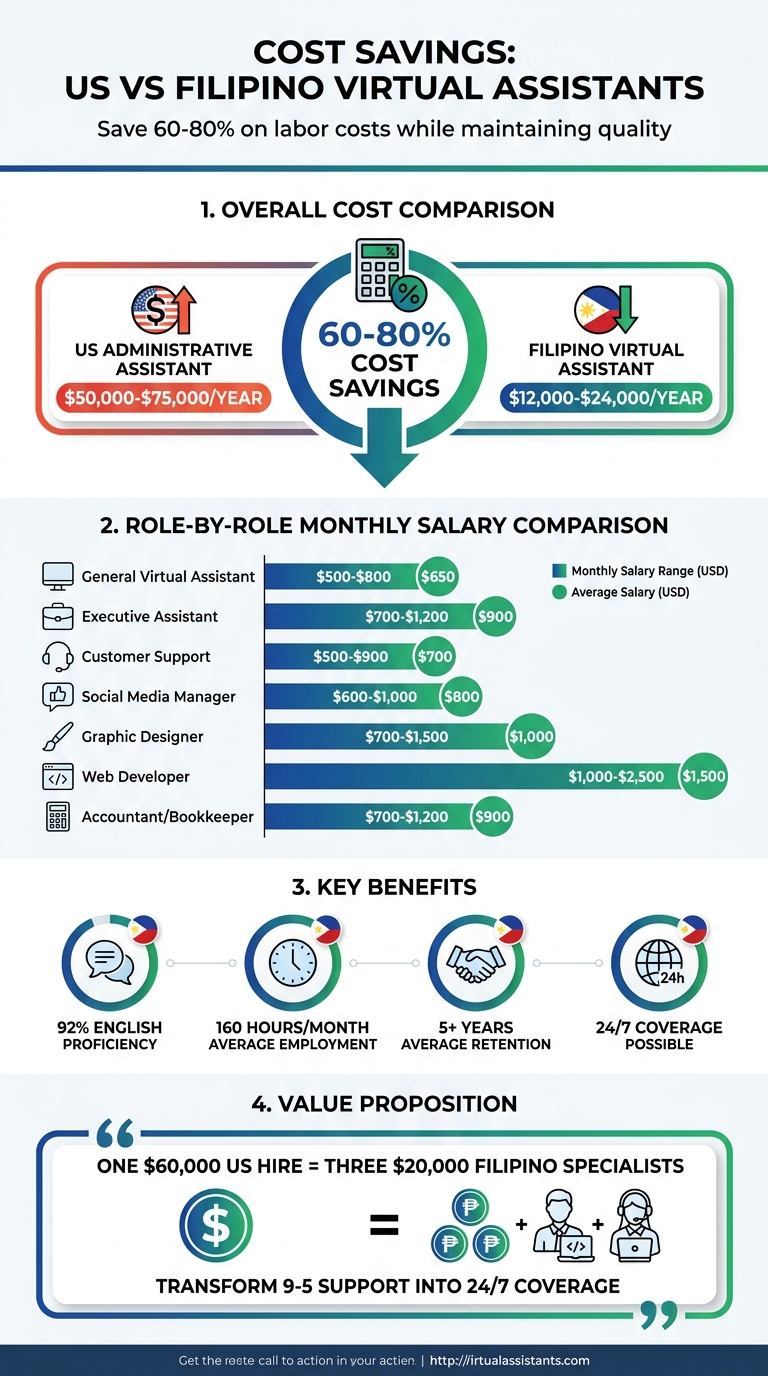
Cost Comparison: US vs Filipino Virtual Assistants by Role
How To Hire A Great Filipino Virtual Assistant (And Avoid Costly Mistakes)
sbb-itb-3690fed
Why Hire Filipino Virtual Assistants
Filipino virtual assistants bring a mix of specialized skills, strong English proficiency, and affordability to the table. By hiring from the Philippines, businesses can cut labor costs by 60% to 80% compared to hiring US-based employees, all while tapping into a skilled workforce.
To put it in perspective, hiring a US-based administrative assistant typically costs $50,000 to $75,000 annually, factoring in benefits and taxes. In contrast, a comparable Filipino virtual assistant usually costs between $12,000 and $24,000 per year.
“One $60,000 US hire becomes three $20,000 Filipino specialists. Your customer support becomes 24/7 instead of 9-5. Your retention goes from 18 months to 5+ years.”
- Mark, Culture Writer at HireTalent.ph
Filipino virtual assistants don’t just handle administrative tasks - they excel in specialized roles across high-demand industries. For example, they can manage eCommerce platforms using tools like Helium10 and JungleScout, oversee real estate CRMs such as Follow Up Boss and KVCore, execute SEO strategies involving keyword research and link building, and even create professional video content using Adobe Premiere or DaVinci Resolve. Many are also adept at integrating AI tools to streamline workflows, addressing the 30% of business tasks that still require human creativity and decision-making.
Their technical expertise extends to platforms like Slack, Asana, Google Workspace, and HubSpot, ensuring smooth integration into your operations. Combine this with their effective communication skills and natural alignment with US business practices, and you’ve got a workforce ready to support your goals.
Filipino professionals are also known for their loyalty and reliability. With a strong service-oriented mindset, they align seamlessly with US customer success initiatives. Thanks to their experience with international business culture, they understand Western workflows and consistently deliver high-quality results.
How to Hire Filipino Virtual Assistants Using FindTalent.ph
FindTalent.ph simplifies the process of hiring Filipino virtual assistants by combining AI-driven matching with verified candidate profiles. This platform connects you with pre-screened professionals across 14 specialized categories, including Admin, AI & Automation, E-commerce, and Real Estate. With FindTalent.ph, you can find the right fit for your needs in just a few days. Start by defining your requirements to make the most of the platform's AI-powered tools.
Step 1: Define Your Needs and Required Skills
Before posting a job, outline the specific tasks you'd like your virtual assistant to handle. Whether it's managing calendars, drafting emails, or conducting market research, be clear about essential and optional skills. Include any tools they’ll need to use, such as Instantly, Notion, or Slack, and specify work hours (e.g., 9:00 AM–5:00 PM EST). When creating your job post, highlight:
- Three core skills
- Three essential tools
- Two target industries
This level of detail helps the AI deliver better matches. Also, set a fair salary - starting at $600/month - and remember to include the 13th-month bonus, which is one-twelfth of the annual salary and typically paid in December. Job posts with clear and specific details tend to attract candidates 60% faster than generic ones.
For a winning job post, include your company mission, daily tasks, salary range, and growth opportunities. Here's a quick look at average salaries for common roles:
| Role Category | Monthly Salary Range (USD) | Average Monthly Salary (USD) |
|---|---|---|
| General Virtual Assistant | $500 – $800 | $650 |
| Executive Assistant | $700 – $1,200 | $900 |
| Customer Support | $500 – $900 | $700 |
| Social Media Manager | $600 – $1,000 | $800 |
| Graphic Designer | $700 – $1,500 | $1,000 |
| Web Developer | $1,000 – $2,500 | $1,500 |
| Accountant/Bookkeeper | $700 – $1,200 | $900 |
Step 2: Leverage AI for Candidate Matching
Describe your hiring needs in simple terms, and let the AI do the heavy lifting. The platform scans its pool of verified professionals to find candidates who meet your criteria. When posting your job, select the "Customize Job Application with AI" option to generate tailored screening questions. For example, if you're hiring a video editor, the AI might ask, "What tools do you use when editing video reels for Instagram?" These questions help assess technical skills upfront.
The more specific your requirements, the better the results. For instance, specifying "Email Marketer with experience in Cold Email & AI Tools" ensures the AI identifies candidates with the right expertise. Matches are based on verified skill scores, certifications, and real work samples rather than self-reported data.
"The AI features were super helpful... the platform makes it easy to find the right specialist for your needs."
– Brianna Wilson, Head of Growth, Ecom Solutions
Once you have your matches, review their detailed profiles to proceed with confidence.
Step 3: Review Pre-Vetted Profiles
All profiles on FindTalent.ph go through a thorough screening process, including interviews, skills tests, and internal ratings. If you'd prefer a more hands-off approach, you can use their recruitment service. This option delivers 1–3 top candidates directly to your inbox, saving you time on initial filtering. Every candidate is also evaluated for strong English skills and familiarity with remote tools like Slack, Asana, and Google Workspace.
Step 4: Conduct Interviews and Test Skills
Before making a final decision, assess candidates with a paid trial task. For instance, if you're hiring a social media manager, you could ask them to draft three Instagram captions and schedule them in your content calendar. Trial tasks typically cost $5–$20 for 2–4 hours of work.
After the trial task, move on to video interviews with the top 2–3 candidates. Use these interviews to confirm both technical skills and compatibility with your team. Ask targeted questions like, "How would you approach setting up a project in Asana?" The combination of trial tasks and interviews ensures you make confident hiring decisions.
Step 5: Finalize Your Hire with Added Protection
Once you’ve chosen your candidate, onboard them by setting clear expectations for deliverables, communication, and performance metrics. FindTalent.ph provides a free replacement guarantee, giving you added peace of mind. Most U.S. businesses hire Filipino virtual assistants as independent contractors, simplifying tax compliance since they handle their own local taxes. This setup makes hiring through FindTalent.ph both cost-effective and low-risk.
"Hiring a specialist from FindTalent.ph to manage my inbox, social media, and daily operations has given me so much time back. I can now focus on high-impact work instead of routine tasks."
– Filip Nielsen, CEO, Nielsen Digital
Legal and Payment Considerations for US Businesses
When hiring Filipino virtual assistants, understanding the legal and payment aspects is crucial to protecting your business and ensuring smooth operations. For most US businesses, hiring these assistants as independent contractors simplifies the process - you avoid the need to register a local entity in the Philippines or deal with complex payroll tax systems. The next step is to choose an efficient and cost-effective payment method.
Contracts and Compliance with Philippine Labor Laws
Your contract should clearly state that the virtual assistant (VA) is an independent contractor. This means they provide their own equipment and determine their work methods. However, be mindful of the Philippine Department of Labor and Employment's "four-fold test", which assesses employment status. If you exercise too much control, such as dictating daily tasks or using invasive monitoring software, you may be classified as the employer, regardless of what the contract says.
"The element of control is the most important [in determining employment status]. Even if a written agreement labels the Filipino worker an 'independent contractor,' a US company that dictates daily tasks... will likely be deemed the employer." - Respicio.ph
Another critical element to include in your contract is an intellectual property assignment clause. Under RA 8293, any work created by the VA is, by default, their property unless the contract specifies otherwise. Additionally, make sure to collect a W-8BEN form from every contractor before processing their first payment. This IRS form certifies their non-U.S. status and exempts you from withholding U.S. taxes. It’s valid for three years and provides protection during audits.
Once these legal bases are covered, the focus shifts to selecting the right payment method.
Payment Methods and Currency Conversion
After ensuring compliance with legal requirements, choosing an effective payment method is essential to maintaining cost efficiency. Minimizing transfer fees is key to preserving the financial benefits of hiring Filipino virtual assistants.
Wise is the preferred payment platform for approximately 70% of employers working with Filipino VAs. It offers the real mid-market exchange rate (the rate shown on Google) with fees as low as 0.57%. For a $700 payment, this translates to fees between $4 and $7. Another reliable option is Payoneer, which is particularly useful if your VA prefers to keep a USD balance. However, Payoneer’s fees are slightly higher, ranging from 1% to 2%.
Avoid using PayPal. Its hidden exchange rate markups and fees - often exceeding 5% - significantly reduce your VA’s take-home pay. For smaller, one-time payments or bonuses, platforms like GCash or PayMaya offer instant transfers.
If you’re managing a team of 10 or more VAs, you might want to look into an Employer of Record (EOR) service, such as Deel or Rippling. These platforms handle payroll, tax withholding, and mandatory Philippine benefits on your behalf. While EOR services charge annual fees ranging from $500 to $1,500 per employee, they simplify compliance and reduce the risk of misclassification under Philippine labor laws.
How to Manage Filipino Virtual Assistants Effectively
In 2026’s fast-paced remote work world, managing a Filipino virtual assistant (VA) effectively starts right away. Success lies in using the right tools, providing timely feedback, and understanding their work culture.
Set Up Reliable Communication Tools
Start with dependable communication platforms. Use Slack or Microsoft Teams for daily updates, Zoom or Google Meet for weekly check-ins, and tools like Asana, Trello, or Monday.com for tracking tasks and projects.
To provide clear instructions that can be revisited, try Loom. This tool helps avoid misunderstandings and reduces the hesitation some VAs might feel about asking follow-up questions.
For security, password managers such as LastPass or 1Password keep shared accounts safe. Depending on the tasks, you might also need specialized platforms: Zendesk or Freshdesk for customer service, Xero or QuickBooks for accounting, and Mailchimp, Klaviyo, or Canva for marketing.
Once the tools are in place, focus on creating a feedback loop that keeps everyone aligned.
Give Consistent Feedback and Recognition
Technology alone isn’t enough - clear communication and regular feedback are key. Aim to provide feedback within 24 hours of important events, whether it’s to commend great work or address areas for improvement. Striking the right tone matters. For example, instead of vague criticism, use specific feedback like, “This response was too formal for our brand voice.” This approach avoids triggering hiya (a sense of shame) and keeps the conversation constructive.
Monthly reviews, even if brief, can help uncover small issues before they grow. During these check-ins, ask directly: “Is there anything I do that slows you down?” Many Filipino VAs may not volunteer feedback unless you explicitly invite it.
Retention often comes down to career growth.
"Filipino VAs who see a growth path with you stay 3–5× longer than those who see a ceiling"
- WorkFil
Consider offering annual raises between 5–15% based on performance, funding skill-building courses, or expanding their responsibilities over time. These steps show you’re invested in their future and can help you retain top talent indefinitely.
Understand Filipino Work Culture and Preferences
Cultural understanding can make or break your management approach. Filipino work culture places high value on harmony and respect for authority. As a result, your VA might hesitate to voice concerns or say “no” outright. To counter this, make it clear that asking questions is not only acceptable but encouraged.
"It's okay to say you don't know something. What matters is how you find the answer"
- Darin Phillips, FilipinoContractors.com
Be specific with instructions. For example, instead of saying, “Handle customer emails,” clarify with: “Respond to customer emails within 2 business hours. You can issue refunds up to $100 without approval.” Clear guidelines prevent confusion and empower your VA.
It’s also important to respect local holidays and infrastructure challenges. From June to November, typhoon season can cause power and internet outages. Offering flexibility during these times shows empathy and builds loyalty. Additionally, recognizing major Philippine holidays and providing a 13th-month pay bonus in December - though not legally required for contractors - can demonstrate your appreciation and strengthen your working relationship.
Conclusion
Hiring Filipino virtual assistants in 2026 presents an opportunity to tap into a highly skilled, English-speaking workforce at a fraction of the cost of Western hires. With over 113 million English speakers and a 95% literacy rate, the Philippines provides a talent pool that delivers exceptional value for businesses.
Platforms like FindTalent.ph simplify the hiring process. Using AI-powered matching, the platform identifies top candidates from a verified talent pool, ensuring authenticity through team reviews. Plus, you can assign paid trial tasks to assess a candidate's performance before making a long-term commitment. With hourly rates between $5–$15 compared to $80–$150 in the US or Europe, businesses can save up to 80% while maintaining high-quality output.
FindTalent.ph also offers added benefits like replacement protection and AI-driven rankings that predict match quality and retention risk. Whether you’re looking for a general virtual assistant at $500–$800 per month or a web developer for $1,000–$2,500 per month, the platform's vetted talent pool spans roles from customer support to AI automation.
Start building your remote team today with skilled Filipino professionals who align seamlessly with your business needs.
FAQs
What tasks should I outsource first to a Filipino VA?
Start with outsourcing straightforward and repetitive tasks such as data entry, email management, scheduling, and customer support. These are perfect for testing a Filipino VA’s ability to communicate effectively, meet deadlines, and deliver quality results. Once you're confident in their performance, you can gradually assign more advanced duties.
How do I avoid contractor misclassification when hiring from the Philippines?
To steer clear of contractor misclassification, it's crucial to have a contract that explicitly identifies the worker as an independent contractor. This should outline key details like the scope of work, payment terms, and the contractor's autonomy in completing tasks. Avoid offering benefits typically reserved for employees, imposing fixed work schedules, or withholding taxes unless the individual is legally classified as an employee.
It's also wise to consult legal professionals and keep thorough documentation, such as a well-drafted contractor agreement. These steps can help you stay aligned with Philippine labor laws and avoid potential legal issues.
What’s the best way to onboard and manage a Filipino VA across time zones?
When working with a Filipino virtual assistant (VA) across different time zones, preparation and communication are key. Start by setting clear working hours and defining expectations right from the beginning. This ensures everyone is on the same page about availability and responsibilities.
Leverage asynchronous tools like email or project management platforms to keep communication and tasks flowing smoothly, even when you're not online at the same time. These tools make it easier to manage workflows without constant back-and-forth.
During onboarding, provide a detailed process that includes skill assessments to understand their capabilities and a brief orientation about your work culture. This helps them integrate into your team more effectively.
To build trust and maintain a good working relationship, balance regular video check-ins with asynchronous updates. This combination keeps communication personal while respecting time zone differences. Also, make sure to discuss deadlines, holidays, and availability upfront to avoid any potential misunderstandings.